

It’s not a promise you'll “get your money back”. It’s not a “subscription to future vet bills”. Here's where insurance began, where pet insurance came from, and what "risk transfer" really means. We will try to explain it the way we'd explain it to a friend.
Most people can tell you roughly what insurance does Far fewer could tell you what it actually is or why it's worked, in more or less the same basic shape, for thousands of years. That matters, because a lot of the frustration people feel about insurance such as "I paid all this time and never claimed" being the big one, comes from a very understandable but wrong idea of what they bought in the first place.
This guide is the foundation the rest of FurWise's content sits on: where insurance came from, where pet insurance came from, what "risk transfer" means, and how it plays out differently depending on whether you're insuring a pet, a house, a car, or your own life. None of it is specific to any one FurWise-listed insurer, it's the background knowledge that makes the rest of it click.
Insurance is old, much older than any company selling it today. Almost 4,000 years ago, Babylonian merchants were already doing a rough version of it. A trader would borrow money to fund a sea voyage, on the condition that if the ship sank or was lost, the loan was cancelled. If the voyage succeeded, the trader repaid the loan plus extra interest. That extra interest was, in a way, the first known insurance premium. The merchant had transferred the “risk” of losing everything at sea onto the lender, in exchange for a payment. Roman citizens did something similar closer to home. Burial societies that collected small regular dues from members and used the pool to cover funeral costs when someone died, so no single family had to fund one alone.
Marine insurance (protecting a ship and its cargo against the very real chance it wouldn't come home) became a proper, well-developed trade by the 1400s. Its most famous home came a couple of centuries later in London. Edward Lloyd's coffee house, a meeting spot for sailors, merchants and ship owners in the late 1600s, where people wanting to insure a voyage could find people willing to take on a slice of that risk for a fee. That coffee-house habit gradually formalised into what's now Lloyd's of London, still one of the best-known names in insurance more than 300 years later.
Fire insurance has an even more specific origin story. The Great Fire of London in 1666, which destroyed roughly 13,000 houses in four days. The scale of that loss, with no organised way to rebuild, pushed London toward the first proper fire insurance companies in the decades that followed. This was the beginning of insuring buildings, not just ships. Life insurance came into its own not much later. One of its earliest organised forms in the American colonies was a fund set up in 1759 to support the widows and children of Presbyterian ministers, pooling contributions so a minister's family wasn't left with nothing if he died.
New Zealand's own insurance industry started the same way most young colonies' did, reactively. British fire and general insurers had agents operating here from the early 1850s, but couldn't always keep pace with New Zealand specific risks. Most buildings were timber, firefighting was still bucket-brigade stuff, and in July 1858 a fire destroyed an entire block of central Auckland. Losses like that are what pushed local businessmen to start their own New Zealand-based insurance companies rather than rely solely on insurers on the other side of the world.
Every one of these stories is similar. Something bad happens that a person or family can't easily absorb. A lost ship, a burned house, a death, a fire that takes out a city block. A group of people then agree, in advance, to share that risk between them. That shape is what insurance has always been. Pet insurance is built on the same idea.
The first pet insurance policy on record was written in Sweden in 1890, by Claes Virgin, the founder of what became the Länsförsäkringar insurance group. They didn't cover cats or dogs, they covered horses and livestock, because in 1890 an animal was, first and foremost, a working asset. A farmer who lost a horse lost an income, not just a companion, so insuring it made the same practical sense as insuring a cart or a building. The idea that a household pet, kept purely for companionship, might be worth insuring in its own right came much later.
Britain issued its first pet insurance policies in 1947, and the market there grew steadily enough that by 2009 the UK had the second-highest rate of pet insurance ownership in the world, behind only Sweden. Pet insurance reached North America in 1980, when Veterinary Pet Insurance began offering cover, In 1982, VPI wrote a policy for a very well-known first customer: Lassie, the television dog, believed to be the first insured pet in the United States. By the 1980s, insuring an animal because you loved it, not because it earned its keep, was becoming a normal thing to do.
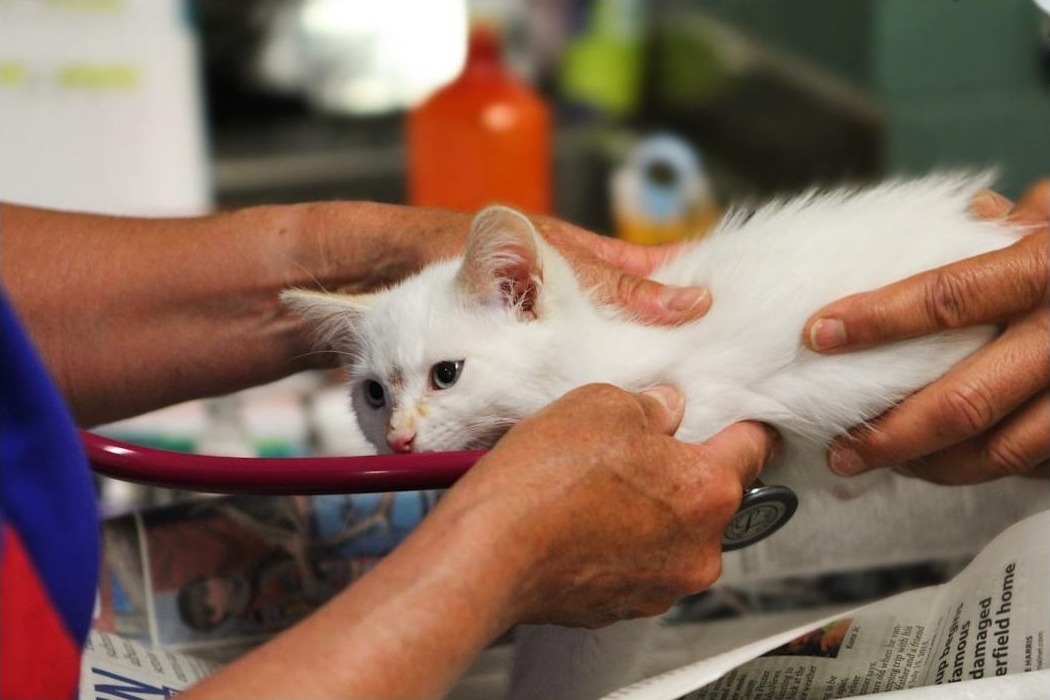
New Zealand doesn't have anything like ACC or a public health system for animals, so every vet bill here has always landed on the owner, in full, at the time of treatment. Even so, pet insurance remains a fairly new habit for most Kiwi households: FurWise estimates that fewer than 15% of NZ pets are currently insured, meaning the large majority of owners are still carry 100% of that risk themselves, out of savings or credit, if something goes wrong. That's the gap FurWise exists to help people make an informed choice about, one way or the other.
Merchants borrow to fund a sea voyage; the loan is cancelled if the ship is lost, repaid with extra interest if it isn't.
Roughly 13,000 houses destroyed in four days. The disaster that gave rise to the first fire insurance companies.
Edward Lloyd's coffee house becomes the meeting place where ship owners and the people willing to back their risk agree terms over coffee.
A fire destroys a whole block of central Auckland, helping spark New Zealand's own domestic insurance industry.
Claes Virgin writes the first pet insurance policy in Sweden, covering working horses and livestock.
America's first insured pet. A sign that insuring an animal for love, not livelihood, had become mainstream.
Not as well taken up here than in the UK or Sweden. Most Kiwi pet owners are still carrying the full risk themselves.
Strip away the paperwork and every insurance policy is doing one thing: moving the financial consequence of something bad happening off your shoulders and onto someone else's, in exchange for a smaller, known payment called a premium. That's risk transfer. You're not paying to make the bad thing less likely. You're paying so that if it happens, you're not the one who has to find the full amount, all at once, alone.
Say 1,000 dog owners each pay $60 a month into a shared pool of money, that's $720,000 a year, sitting there in case it's needed. Nobody knows in advance which of those 1,000 dogs will need a $12,000 surgery this year. But across a group that size, the insurer can estimate, reasonably accurately, roughly how many dogs in total are likely to need major treatment, even though it can't say which ones. The shared pool of money absorbs those costs as they land, plus the insurer's own running costs and usually a margin. Each individual owner traded an uncertain, possibly enormous bill for a small, certain, predictable one. Nobody "wins" or "loses" this transaction the way you would a bet, everyone bought the same thing: certainty.
That's also why the size of the pool matters, and why it needs to be made up of genuinely independent risks. One dog getting sick shouldn't make another dog, in a different household, any more or less likely to get sick too. It's the same reason a single person can't meaningfully "insure themselves" against a $12,000 bill by putting $60 a month into a personal savings account. On their own, they either have the money when the bill lands or they don't. Pooled together with a thousand other owners facing the same kind of risk, that same $60 a month becomes something genuinely protective, because it's backed by everyone else's $60 too.
Pet, general and life insurance are all risk transfer, but what's being transferred, and how the payout actually works, differs in ways worth knowing.
| Pet insurance | General insurance (house, car) | Life insurance | |
|---|---|---|---|
| What risk is being transferred | The cost of unpredictable vet treatment, such as an accident or sudden illness. | The cost of unpredictable damage, loss or theft affecting a car or property. | Typically, the financial gap left behind for the people who depend on your income. |
| What triggers a claim | An event that might never happen. A healthy pet may go its whole life without one. | An event that might never happen. A house may never burn down, a car may never crash. | An event that will happen eventually. The uncertainty is entirely about when it will occur. |
| How the payout is worked out | Reimburses the actual vet costs incurred, minus your excess and co-payment, up to policy limits. | Pays out based on the actual cost to repair or replace, minus any excess. | Usually a fixed amount agreed when you took out the policy. |
| How risk (and price) tends to change | Generally rises with your pet's age and varies by breed. | Varies with the property or vehicle's value, location and claims history. | Priced mainly on your age, health and past times. |
This is a general, educational comparison. Always read the policy wording (PDS) for details.
This is the idea the rest of this guide has been building toward, because it's the one that causes the most genuine frustration for Kiwis. It's a completely understandable instinct to think: "I've paid premiums all this time and my pet hasn't needed a single claim, so what did I actually get?" But that question assumes insurance is a kind of savings account, where paying in should eventually mean getting something back out. It isn't, and it was never meant to be.
This is also why an excess and a co-payment exist on almost every policy. They're not the insurer being stingy, they're the line marking exactly how much of the risk has been transferred versus how much you're still holding yourself (both are explained in full, with worked examples, in FurWise's excess and co-payment guides). Insurance was never designed to make the bad event disappear, it's designed to stop that event from being financially catastrophic. Those are different jobs, and the second one is the one insurance has always actually done.
If risk transfer only works because a pool of similar risks is genuinely predictable in total, then it follows that the pool has to be priced fairly, otherwise low-risk owners would be quietly subsidising high-risk ones, and the whole arrangement stops feeling worth it for anyone paying close attention. That's why a young, healthy crossbreed and an older, breed-prone dog don't pay the same premium for similar cover: their underlying risk of needing a costly claim genuinely isn't the same, and the price is the insurer's honest estimate of that difference.
It's the same principle behind why a policy usually costs more to renew as your pet gets older. Older pets are, on average, more likely to need treatment, in the same way an older car is more likely to need a costly repair. None of this is personal to your specific pet; it's the pool being priced to match reality as closely as possible, so the whole system of shared risk stays fair for everyone in it, including the people who end up needing it most.
How FurWise makes money: FurWise is free for pet owners to use. We might earn a referral fee if you choose to buy a policy through a link on this site, we carry advertising from insurers and other pet-related businesses, and we might sell participating insurers anonymised, aggregated benchmarking reports built from de-identified usage data. None of these affect a provider's FurWise rating, ever. Read more.
Where this information comes from: Britannica's Historical development of insurance (Babylonian bottomry contracts, Roman burial societies, the growth of marine insurance, the Great Fire of London and the birth of fire insurance, the 1759 Presbyterian Ministers' Fund); Wikipedia's overview of the history of pet insurance and Healthy Paws Pet Insurance's history of pet health insurance (Claes Virgin and the first 1890 Swedish policy, the 1947 UK market, Veterinary Pet Insurance and Lassie's 1982 US policy); Te Ara — The Encyclopedia of New Zealand (early NZ fire and general insurance, including the 1858 Auckland fire); and FurWise's own The Real Cost of Not Having Pet Insurance (NZ pet insurance uptake) and glossary (excess, co-payment). The 1,000-owner pool example is an illustrative, simplified explanation of risk pooling, not a real FurWise or industry data set. All facts reflect what was publicly available at the time of writing (August 2026).